
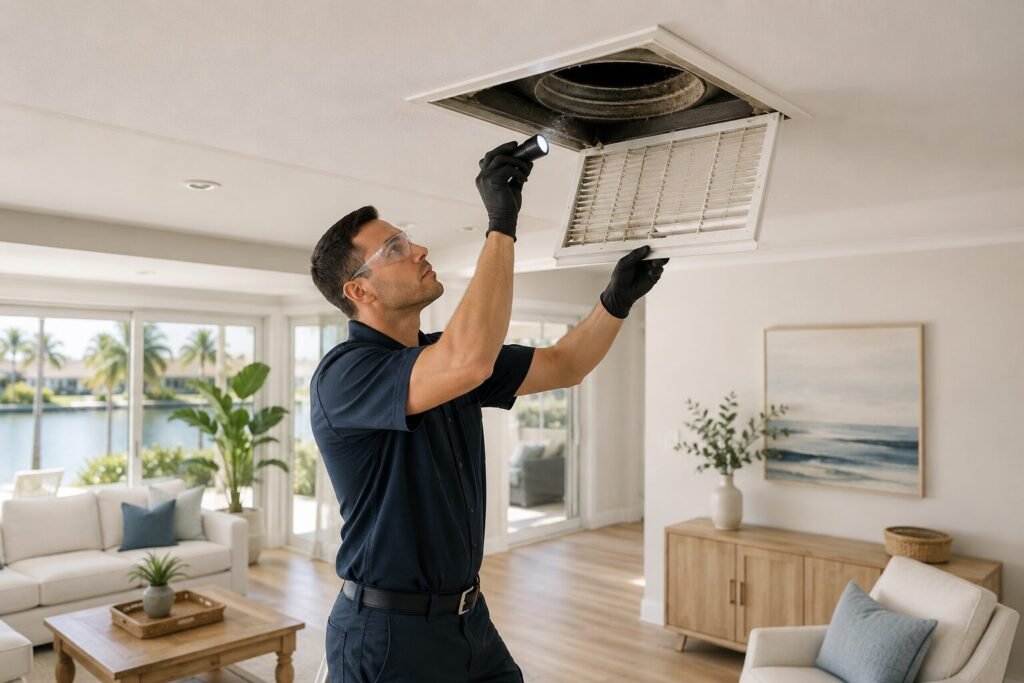
South Florida air-conditioning systems operate for much of the year. Indoor air repeatedly passes through returns, filters, the air handler, supply ducts, and registers. When those components are clean, sealed, dry, and operating correctly, the system can distribute conditioned air without creating an obvious dust or odor problem.
When buildup, leakage, moisture, or damaged material is present, ductwork may become one source of indoor air concerns. Understanding where material begins and how it enters the airflow is more useful than assuming every dusty room needs duct cleaning.
Follow the Airflow Path Before Blaming the Ducts
Air ducts usually move material that originated somewhere else. A complete diagnosis follows the path from the original source to the evidence a homeowner sees inside the room.
What the Evidence Can—and Cannot—Tell You
The same symptom can have several possible causes. This comparison helps explain why a visual inspection should evaluate both the ducts and the rest of the HVAC system.
| What You Notice | Possible Duct Connection | Other Sources to Check |
|---|---|---|
| Dust blows from vents | Loose buildup, renovation debris or damaged interior duct material | Dirty air-handler components, filter bypass or nearby register dust |
| Dust returns quickly | Return leaks pulling air from an attic or unconditioned space | Pets, open doors, fabrics, outdoor particles or housekeeping activity |
| Musty odor when AC runs | Damp duct material, damaged insulation or condensation | Drain problems, wet air-handler components, roof leaks or attic moisture |
| Filter gets dirty quickly | Return-side leakage or unusually high duct-system particle load | Incorrect filter, poor fit, heavy household activity or outdoor air |
| Debris after renovation | Project material entered uncovered registers or returns | Dust remains on floors, walls, furnishings or inside equipment |
Not Sure Whether the Dust Is Coming From Your Ducts?
Duct & AC Masters can inspect the system and explain whether cleaning, repair, AC service or another correction fits the evidence.
Six Ways Ductwork Becomes Part of the Problem
Heavy Dust or Loose Debris Collects Inside
Meaningful deposits, construction material, insulation fibers or pest-related debris may be disturbed by airflow and appear around registers or inside rooms.
Return Gaps Pull Air From the Wrong Place
A return-side leak may draw dusty attic, wall-cavity, crawl-space or garage-adjacent air into the system instead of pulling only from conditioned rooms.
Condensation or Water Affects HVAC Materials
A wet component, damaged duct insulation, condensation or water intrusion can create musty odors and leave materials that require more than routine cleaning.
Animals or Insects Damage the System
Droppings, nesting material, damaged jackets and entry points should be addressed before cleaning. Compromised duct sections may also need repair or replacement.
Project Dust Enters Open Returns and Registers
Drywall sanding, flooring work, demolition and attic projects can send fine debris into the system when HVAC openings are not covered.
Air Bypasses or Overloads the Filter
An improperly fitted filter, bypass gaps, restricted airflow or neglected HVAC components can allow more material to collect or move through the system.
Is Air Duct Cleaning the Right Match?
Professional air duct cleaning removes confirmed dust, debris and buildup from the areas included in the service. Its value depends on whether material inside serviceable ducts is actually part of the problem.
- Confirmed loose dust and debris inside serviceable ducts
- Construction material that entered uncovered HVAC openings
- Residual material after pests and entry points are corrected
- Visible buildup around registers and accessible duct interiors
- Tears, disconnected ducts or return-side air leaks
- Crushed, deteriorated or poorly designed ductwork
- Condensation, plumbing leaks or AC drainage problems
- Indoor particle sources unrelated to the HVAC system
Cleaning is not a universal indoor-air-quality treatment. It will not seal leaks, correct humidity, repair a wet air handler, stop a roof leak or replace damaged duct material. If the cause remains, the dust or odor may return.
If you are unsure about timing, read our guide explaining how often air ducts should be cleaned in Florida. The condition of the system matters more than automatically cleaning on a fixed calendar.
Choose the Service Based on the Condition
Choose cleaning when serviceable ducts contain confirmed loose buildup, debris or material that can be removed without repairing the duct structure.
Use air duct restoration for repairable leaks, loose connections, damaged insulation, poor support or localized problems when most of the system remains usable.
Consider air duct replacement when deterioration, contamination, poor design or physical damage affects too much of the system for a reliable repair.
Inspect AC equipment, drains, filters, attic conditions and household sources when the ducts do not fully explain the concern.
Cleaning, restoration and replacement solve different problems. Our comparison of air duct repair versus replacement explains how the inspection findings guide that decision.
What a Professional Inspection Should Cover
A useful inspection goes beyond removing one vent cover. It checks the full system for the source, the entry point and the conditions allowing the concern to continue.
Accessible supply and return areas, registers and interior surfaces
Connections, seams, boots, supports, jackets and return cavities
Filter size, fit, bypass gaps, return draw and supply delivery
Condensation, drain issues, wet insulation and building leaks
Accessible air-handler, blower, coil, drain and cabinet areas
Pets, smoking, candles, products, open windows and renovations
Professional air conditioning inspection and repair may be necessary when airflow, drainage, temperature control or equipment operation has changed.
Why South Florida Conditions Change the Diagnosis
Long cooling seasons mean more air passes through the HVAC system. Ducts also commonly run through hot attics, where return leaks may draw in dust or insulation particles. Humidity becomes important when warm, moisture-heavy air reaches cold ducts or HVAC surfaces.
Humidity alone does not prove ducts are contaminated. Our guide to Florida humidity, air ducts and attic insulation explains why the moisture source must be identified before cleaning or replacing materials.
Attic conditions should be reviewed when return leaks, pests, odors or loose insulation are involved. If attic insulation is wet, contaminated, pest-damaged or unsuitable to remain, professional attic insulation removal may be needed after the source is corrected.
A Practical Routine for a Cleaner HVAC System
- 01
Check the HVAC filter regularly and use the size and type appropriate for the equipment. - 02
Make sure the filter fits securely so air cannot bypass large gaps around the frame. - 03
Keep supply registers and return grilles open, clean and unobstructed. - 04
Cover returns and registers during demolition, drywall sanding, flooring and other dusty work. - 05
Address pest activity and repair damaged duct entry points before scheduling cleaning. - 06
Schedule AC service for drain backups, condensation, musty odors, unusual cycling or reduced airflow. - 07
Repair duct leaks instead of repeatedly cleaning dust that continues entering from the attic.
Air Duct Inspections Across South Florida
Duct & AC Masters provides duct inspections, cleaning, restoration, replacement and HVAC services across Palm Beach County, Broward County and Miami-Dade County. Homeowners in West Palm Beach, Boca Raton, Delray Beach, Boynton Beach, Wellington, Fort Lauderdale, Miami and nearby communities can request a condition-based recommendation.
Find Out What Is Affecting Your Indoor Air
Schedule an inspection to identify buildup, duct leakage, damaged material, moisture, filtration problems or AC concerns—and choose the service that fits the actual condition.