
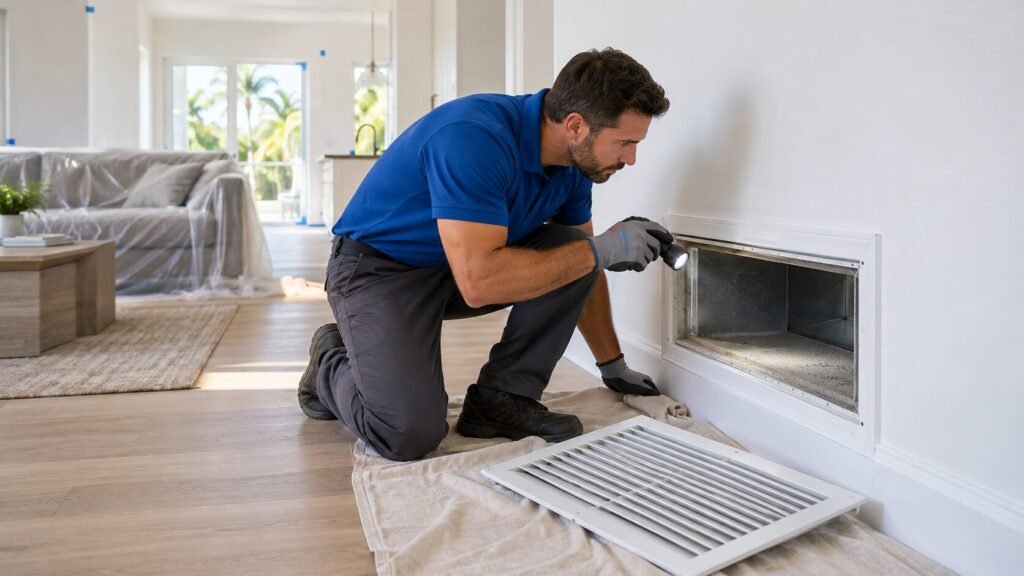
After the remodel
The renovation is finished. Is your HVAC system ready?
Air duct cleaning after renovation is worth considering when inspection confirms significant construction debris or contamination inside the system. It is not automatically necessary after every project. Start by finding out whether dust entered the ducts, which components were affected, and what work is needed.
The flooring is installed, the walls are painted, and the contractor has packed up. Yet a fine layer of dust keeps appearing on furniture. Before assuming the air ducts are responsible, look at both the renovation cleanup and the HVAC system.
Dust may remain on shelves, trim, fabrics, and other surfaces. It may also have entered open registers, return grilles, or duct connections during the project. Those situations call for different responses.
A professional inspection can help determine whether air duct cleaning belongs on your post-renovation checklist—or whether the priority is additional surface cleanup, filter maintenance, equipment service, or duct repair.
In this guide
How can renovation dust get into air ducts?
Drywall sanding, demolition, sawing, and other construction activities generate particles that can settle into unprotected HVAC openings. The system does not have to be running for debris to enter an exposed register or disconnected duct.
Open registers and return grilles
Uncovered openings give dust a path into the system. Returns deserve particular attention because they draw room air toward the HVAC equipment when it operates.
Removed or disconnected duct sections
Ceiling work, additions, and layout changes may expose duct interiors. Ask whether open ends were protected and whether the affected connections were inspected before the project was closed out.
Dust reaching the equipment
A filter is not a complete construction-dust barrier. Fine particles can reach HVAC components, particularly when the system operates in a dusty work area or air bypasses an improperly fitted filter.
Useful project history: Tell the inspector what work was done, which rooms were involved, whether vents were protected, and whether the AC operated during dust-producing activities.
When should you request a post-renovation duct inspection?
An inspection is especially useful after substantial dusty work when the system’s protection or condition is uncertain. Reasons to investigate include:
- Registers or return openings were left exposed during demolition or sanding.
- Construction scraps or significant deposits are visible inside an accessible opening.
- Particles appear to come from supply vents when the system operates.
- Ductwork was moved, disconnected, or worked around during the project.
- Airflow or cooling performance changed after the renovation.
These observations do not all point to the same repair. For example, changed airflow may involve a damaged connection rather than dirty ducts. Ask the technician to show you the findings and explain how they support the recommendation.
A light dusty film on a grille alone does not establish that the entire system needs cleaning. The decision should reflect the condition inside the system, not simply the fact that a remodel occurred.
When should air duct cleaning happen after renovation?
Coordinate the timing with both the renovation contractor and HVAC provider. Cleaning while major dust-producing work is still underway can leave the system exposed to another round of contamination.
- Identify any dusty work still remaining. Include punch-list sanding, cutting, and repairs—not just the main construction phase.
- Complete the initial construction cleanup. Remove project debris and address dust on accessible surfaces so it is not immediately reintroduced.
- Inspect the HVAC system. Determine which ducts or components need cleaning, maintenance, or repair.
- Complete the agreed service. Coordinate any additional equipment work and filter replacement identified in the inspection.
- Review the result. Ask what was cleaned, what remains unresolved, and whether further construction activity requires continued protection.
This is a planning sequence, not a reason to keep operating a visibly contaminated or malfunctioning system. Ask the HVAC professional whether inspection or service is needed before operation resumes.
Still renovating? Plan dust containment and HVAC protection before the next phase. Do not cover supply and return openings and then continue running the system as usual. Coordinate shutdown, protection, and safe restart with the appropriate professionals.
What should professional cleaning include?
Wiping the vent covers is not the same as cleaning the duct system. A useful proposal explains how deposited material will be loosened, collected, and removed without unnecessarily spreading it through the home.
Professional HVAC cleaning commonly combines appropriate agitation tools with controlled vacuum collection. The method must suit the duct material and condition. Damaged liners or fragile sections need evaluation before cleaning begins.
Ask whether the inspection covers related components such as the return area, blower compartment, and coil. If contamination extends beyond the ducts, the work should address those findings rather than leave an affected component out of the discussion.
Ask for these details in writing:
- Which ducts and HVAC components are included?
- How will dust be collected and the living space protected?
- Are equipment cleaning and repairs included or priced separately?
- How will any service openings be properly closed?
- What photos or inspection findings will document completion?
What duct cleaning will not fix
Cleaning removes appropriate debris from the serviced areas. It does not repair a disconnected run, restore a crushed duct, or correct a layout that no longer serves a renovated room properly.
If construction disturbed the duct system, air duct restoration may be needed alongside or instead of cleaning. Ask the inspector to separate cleaning recommendations from repair recommendations.
Duct cleaning also does not replace the renovation contractor’s final cleanup or eliminate every source of household dust. For broader context, read our guide to air ducts and indoor air quality.
How to prepare for the appointment
Make the visit more useful by sharing the renovation timeline and clearing access to the air handler, return grilles, and affected rooms. Provide any available before-and-after photos of ductwork that was moved or exposed.
If you live in a condo, confirm contractor entry procedures and any building-access requirements. If more work is scheduled, tell the cleaning provider before choosing an appointment date.
Afterward, keep the service record with your renovation documents. Future cleaning should be based on the system’s condition rather than an automatic short interval. Our article on how often air ducts should be cleaned in Florida explains that approach.
Duct & AC Masters
Finish your renovation with a clear HVAC plan.
Duct & AC Masters provides air duct cleaning and related duct services across Palm Beach, Broward, and Miami-Dade counties. Tell us what work was completed and what you are noticing so we can discuss the next step for your home.
Prefer to call? (954) 324-1406
Air duct cleaning after renovation: FAQs
Do air ducts always need cleaning after remodeling?
No. The type of work, system protection, and inspection findings matter. A small project with effective containment may not justify duct cleaning. Significant debris inside the system calls for a different response.
Is replacing the air filter enough after renovation?
A new filter does not remove material already deposited in ducts or equipment. Check the filter according to the manufacturer’s instructions and have the system evaluated if construction debris may have entered it. Use the specified filter type rather than assuming a more restrictive filter is suitable.
Should duct cleaning happen before or after the final house cleaning?
Coordinate both services. Major dusty work and the initial removal of construction debris should generally be complete first. Ask the duct-cleaning provider how its appointment fits with the final detailed cleanup and any remaining punch-list work.
Can renovation dust enter ducts when the AC is off?
Yes. Dust and debris can settle into exposed openings even without the fan running. Turning the system off is not a substitute for protecting open registers, duct ends, and equipment during construction.
How much does post-renovation duct cleaning cost?
The estimate depends on the system size, access, duct material, contamination, and included components. Ask for an itemized scope that distinguishes duct cleaning from equipment cleaning, repairs, and any additional work.
Why is my home still dusty after the ducts were cleaned?
Dust may remain on household surfaces or come from ongoing work, normal activity, filter bypass, or duct leaks. Ask what the original service covered and whether another source remains. Repeating duct cleaning without identifying the source may not resolve the problem.