
Cooling & home protection
Water around your indoor AC needs prompt attention.
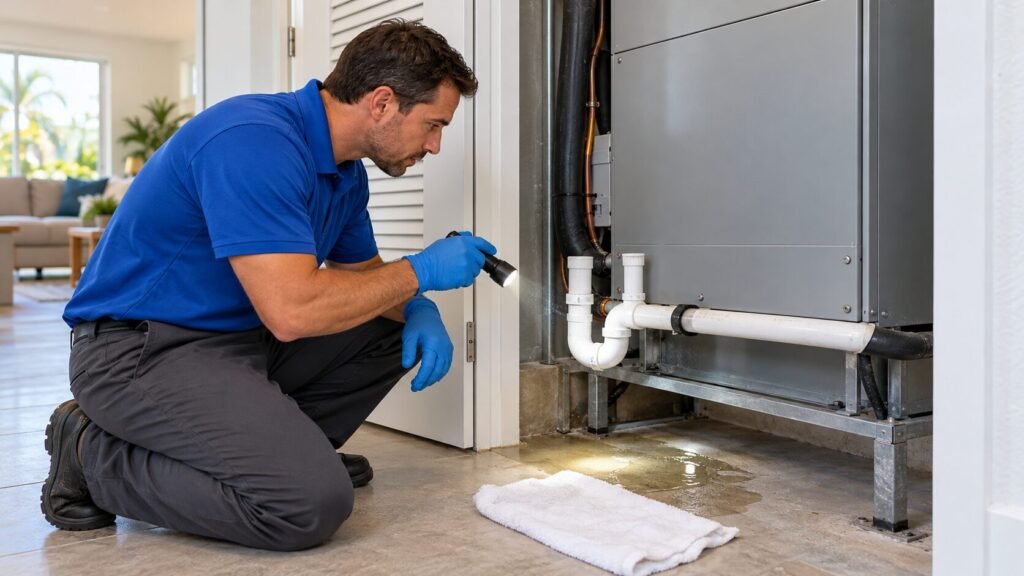
If your AC is leaking water inside, switch cooling off at the thermostat if you can do so safely and arrange an inspection. Common causes include a clogged condensate drain, a damaged drain pan, and ice melting from a frozen evaporator coil. The repair should address the source of the leak before cooling resumes.
A puddle beside the air handler, a wet closet floor, or a new ceiling stain can turn an ordinary cooling day into an urgent service call. The first priority is to limit further water damage while the cause is identified.
An air conditioner removes moisture from indoor air as part of cooling. That moisture should collect and drain through the system’s intended path. Water escaping onto floors, walls, or ceilings means something needs investigation.
This guide explains common reasons for an AC leaking water inside, what you can safely observe, and when to request professional AC repair in South Florida.
In this guide
What should you do when your AC starts leaking indoors?
- Switch cooling off. Use the thermostat if it is safe to reach. Continuing to cool can produce more condensate while the drainage problem remains.
- Keep clear of electrical hazards. Avoid wet equipment, outlets, wiring, and electrical panels. Do not open the air handler or reach into standing water around electrical components.
- Protect accessible belongings. Move nearby items away from the affected area when this can be done safely.
- Record what you can see. Take photos from a safe position and note when the leak appeared, where the water is collecting, and whether cooling had changed.
- Arrange service. Describe active dripping, ceiling staining, visible ice, or a system that shut itself off so the provider can understand the situation.
If the air handler is above a ceiling: Report the location of any water stain or active dripping when requesting service. Stay clear of a sagging or water-damaged ceiling and do not enter an unsafe attic to look for the source.
Why is your AC leaking water inside?
1. The condensate drain line is clogged
Condensate normally moves from the indoor unit’s collection pan into a drain line. Buildup can obstruct that path, allowing water to back up and overflow. A technician should identify the blockage and verify that the drainage route works after it is cleared.
2. The drain pan is damaged or overflowing
A cracked or corroded pan may let water escape before it reaches the drain. Debris or a downstream blockage can also cause overflow. The pan and its connected drainage path need to be evaluated together.
3. Ice is melting from the evaporator coil
Restricted airflow or certain refrigerant problems can contribute to a frozen indoor coil. As ice melts, water may appear around the unit. Visible ice needs professional evaluation; do not chip it away or restart cooling simply because the ice has disappeared.
4. The drainage arrangement needs correction
The drain route and connections must allow water to leave the equipment properly. If leaking began after installation, repairs, or work near the air handler, tell the technician. That timing may help identify a connection or drainage issue.
If cooling also weakened before the leak appeared, mention that separately. Our guide to an AC running but not cooling explains other symptoms that can help describe the problem.
Why did the AC shut off when water collected?
Some systems have a condensate safety switch that interrupts operation when water rises where it should not. A shutdown may therefore be connected to a drainage problem rather than a thermostat failure.
Tell the service provider if the system stopped around the same time the leak appeared. Leave the safety device in place and have the underlying cause investigated before operation resumes.
Is water dripping from a ceiling vent the same problem?
Water at a supply vent needs its own investigation. Condensation around a cold vent, damaged duct insulation, air leakage, or water traveling from another source can produce similar visible symptoms.
Take note of whether moisture is on the grille, around the ceiling opening, or spreading from another area. A roof or plumbing leak may also need to be ruled out. Read more about humidity, ductwork, and attic insulation in South Florida.
What should the AC service visit address?
Explain where the water first appeared and what the system was doing at the time. Photos of an intermittent leak can help, especially if the area looks dry by the appointment.
Depending on the findings, the technician may inspect the drain pan, condensate line, accessible connections, filter, coil, airflow, and any installed water-safety controls. Refrigerant checks may be appropriate when the symptoms point toward a coil-freezing problem.
Before approving the repair, ask:
- Where is the water escaping, and what caused it?
- Which cleaning, repair, or replacement work is recommended?
- How will drainage and operation be checked afterward?
- Does any affected building material need evaluation by another professional?
Keep the diagnosis and service record. If the problem returns, those details help the next technician understand what was found and corrected.
How can you reduce the chance of another leak?
Follow the equipment’s filter instructions and use the specified size and type. Keep supply and return openings clear, and include the condensate drain and pan in professional maintenance.
Ask whether the condition found during the repair calls for a particular follow-up schedule. Report new water, visible ice, unusual shutdowns, or a change in cooling promptly rather than waiting for the next routine visit.
Have the technician explain any recommended homeowner drain care for your specific installation before adding cleaning products or attempting to clear a line.
Duct & AC Masters
Get the source of the water leak checked.
Duct & AC Masters provides air-conditioning repair services across Palm Beach, Broward, and Miami-Dade counties. Tell us where you see water, whether cooling has changed, and whether the system is still operating so we can discuss the next step.
Prefer to call? (954) 324-1406
AC leaking water inside: FAQs
Can I keep running my AC if it is leaking water indoors?
Switch cooling off if you can do so safely and arrange an inspection. Continued operation can produce more water while the problem remains. Have the cause addressed before resuming normal use.
Can a dirty air filter cause an AC water leak?
A clogged filter can restrict airflow and contribute to coil freezing. Melting ice may then produce water around the unit. Other conditions can cause similar symptoms, so a filter change alone does not establish that the leak is resolved.
Why is my AC leaking after I turned it off?
Water may continue draining from the equipment, or ice may be melting from a frozen coil. Tell the technician that the dripping continued after shutdown and report any visible ice or earlier loss of cooling.
Does a clogged drain line mean the air conditioner needs replacement?
A drain blockage alone does not establish that the entire system needs replacement. Ask for the diagnosis and a repair recommendation based on the condition of the equipment and drainage system.
How much does it cost to repair an AC water leak?
The cost depends on the cause, access, parts, and required work. Clearing a drain is a different scope from replacing a damaged pan or diagnosing a frozen coil. Request an estimate that identifies the problem and explains what is included.
Will air duct cleaning stop water leaking from my AC?
Duct cleaning does not repair a condensate drain blockage, damaged collection pan, or equipment fault. If water appears at a vent, have the moisture source identified so the recommended service addresses the actual problem.