
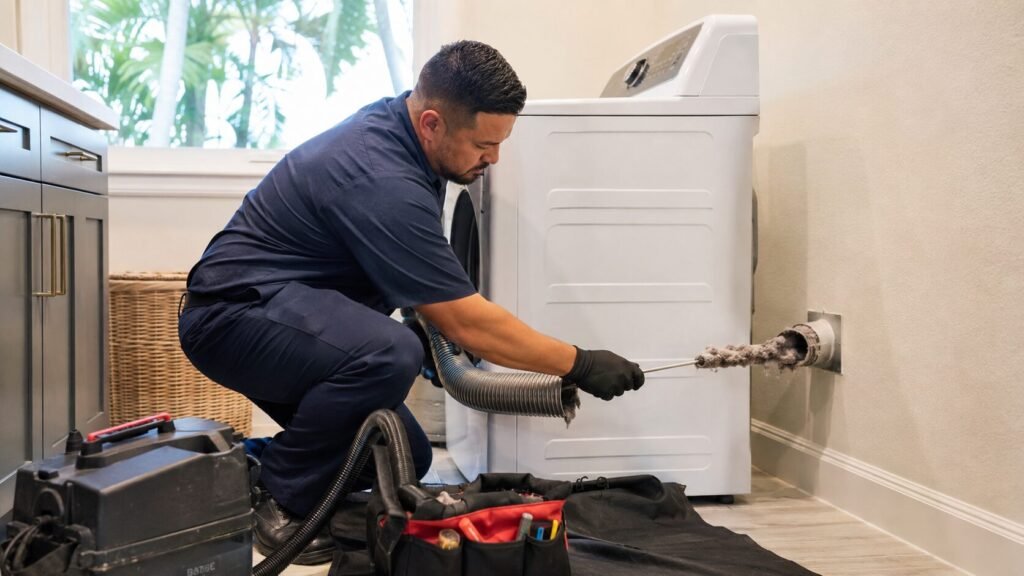
If your dryer is taking too long to dry clothes, do not assume the appliance is failing. In many South Florida homes, the real problem is restricted airflow caused by lint and debris inside the dryer vent line. The dryer keeps running, but hot, moist air cannot escape efficiently.
Clothes that suddenly need two cycles to dry are one of the clearest warning signs of a clogged dryer vent. Excess heat, a burning odor, lint near the vent opening, and weak airflow outside are other signs that it is time to inspect the vent.
A longer drying time is inconvenient, but it can also be a sign that your dryer is working harder than it should. When airflow is restricted, heat and moisture remain in the system longer, placing more strain on the appliance and allowing heat to build up around combustible lint.
Below are seven signs that can help you tell the difference between a normal slow load and a vent problem that may need professional attention.
7 Signs Your Dryer Vent May Be Clogged
Clothes Need More Than One Cycle
A normal load that used to dry in one cycle now comes out damp, especially towels, jeans, bedding, and other heavy fabrics. This often happens because moist air cannot move through the vent quickly enough.
The Dryer or Clothes Feel Very Hot
Some warmth is normal. A dryer cabinet, laundry load, or vent connection that feels unusually hot may indicate that heat is being trapped instead of exhausting outdoors.
The Laundry Room Becomes Hot or Humid
A blocked or disconnected vent can allow excess heat and moisture to collect in the laundry area. South Florida’s humid climate can make this problem feel even more noticeable.
You Notice a Burning Odor
A burning smell should never be ignored. Stop the dryer, disconnect it if it is safe to do so, and arrange an inspection before using it again. The source could be overheating lint or an appliance problem.
Lint Is Collecting Around the Dryer
Lint behind the appliance, around the wall connection, or near the exterior vent cover can point to a loose connection, poor airflow, or buildup inside the vent route.
The Exterior Vent Flap Barely Opens
When the dryer is running, the outside vent flap should open and release a steady flow of warm air. Weak airflow or a flap that remains closed may indicate a restriction deeper in the line.
The Dryer Shuts Off or Runs Much Longer Than Before
Some dryers shut down when they become too hot. Others continue running while the load remains damp. Either change can be a warning that the appliance is struggling against restricted airflow.
Why a Clogged Vent Makes Drying Take Longer
Your dryer removes moisture from clothes by heating the load and moving the resulting warm, damp air through a vent to the outside. If lint narrows that path, the dryer cannot move moisture out of the drum as efficiently. The result is a longer cycle, more heat, and clothes that may still feel damp.
Cleaning the lint screen after every load is essential, but the screen does not capture every particle. Small fibers can pass through and settle inside elbows, long vent runs, wall connections, and exterior covers. The buildup usually happens gradually, which is why homeowners may not notice the change until drying times become frustrating.
Before assuming the vent is clogged, check the basics:
- Clean the lint screen completely.
- Make sure the dryer is not overloaded.
- Confirm that you selected the correct cycle and heat setting.
- Look behind the dryer for a crushed or sharply bent vent hose.
- Check the exterior vent flap while the dryer is running, but do not reach into a moving or hot system.
If those simple checks do not improve drying time, the restriction may be farther inside the vent. Duct & AC Masters provides professional dryer vent cleaning in South Florida to remove hidden lint, inspect the vent path, and help restore airflow.
Still Running the Dryer Twice?
Do not keep wasting time and energy on repeated cycles. Have the vent inspected by a licensed and insured South Florida team serving Palm Beach, Broward, and Miami-Dade counties.
Why Dryer Vent Problems Are Easy to Miss
Most of the vent line is hidden behind the dryer, inside a wall, above a ceiling, or through an attic. You may only see a short hose and the exterior cover, while the heaviest buildup sits in an elbow or a longer section you cannot reach.
Vent design also matters. A short, straight route can usually move air more easily than a long route with several turns. Condos, townhomes, interior laundry rooms, and multistory properties may have longer or less accessible vent paths. That does not automatically mean the system is unsafe, but it makes regular inspection and cleaning more important.
Florida heat and humidity can add to the discomfort caused by poor dryer ventilation. When warm, moist exhaust does not leave the property correctly, the laundry area can feel hotter and more humid, and the dryer may need extra time to finish the same load.
What Professional Dryer Vent Cleaning Includes
A professional cleaning addresses more than the lint you can see near the appliance. The goal is to clear the vent route, check common restriction points, and confirm that air can exhaust outside more freely.
Inspect the Vent Path
The technician checks the dryer connection, accessible vent line, and exterior termination for visible buildup, damage, or airflow restrictions.
Remove Lint and Debris
Specialized tools are used to clean deeper inside the vent route than a household vacuum or lint brush can typically reach.
Review Exterior Airflow
The outside vent opening is checked to help confirm that the flap opens and the system can release hot, moist air properly.
Professional service can also uncover issues that cleaning alone will not solve, such as a crushed connector, loose joint, damaged exterior cover, excessive vent length, or appliance malfunction. A trustworthy technician should explain what was found and recommend only the work the system needs. Learn more about the company’s service approach on the Why Choose Duct & AC Masters page.
How Often Should a Dryer Vent Be Cleaned?
Many homes should schedule dryer vent cleaning about once a year. Your home may need service sooner if you have a large household, wash several loads each week, own pets, dry bulky bedding often, or have a long vent route with multiple turns.
Do not rely only on the calendar. Changes in drying time, heat, odor, and exterior airflow are often more useful than a fixed schedule. If the dryer suddenly needs a second cycle, inspect the basics and address the problem rather than waiting for the next annual cleaning.
Local Dryer Vent Help Across South Florida
Duct & AC Masters serves homes, condos, apartments, and light commercial properties throughout Palm Beach County, Broward County, and Miami-Dade County.
Whether you are in West Palm Beach, Boca Raton, Fort Lauderdale, Hollywood, Miami, or a nearby community, call to confirm availability in your area.
When to Stop Using the Dryer
Turn the dryer off and arrange prompt service if you smell burning, see smoke, notice scorching, hear unusual mechanical sounds, or find that the appliance is repeatedly overheating or shutting down. Do not continue testing the dryer when there is a possible heat or electrical problem.
If the only symptom is a gradual increase in drying time, you may not have an emergency, but it is still worth addressing. Repeated cycles use more time and energy and can place unnecessary strain on the appliance.
Get Your Dryer Airflow Checked
If your clothes are taking too long to dry, Duct & AC Masters can inspect and clean the dryer vent so you can understand what is causing the problem. Get straightforward service from a local, licensed and insured team.